 Facebook
 Twitter


 Gmail
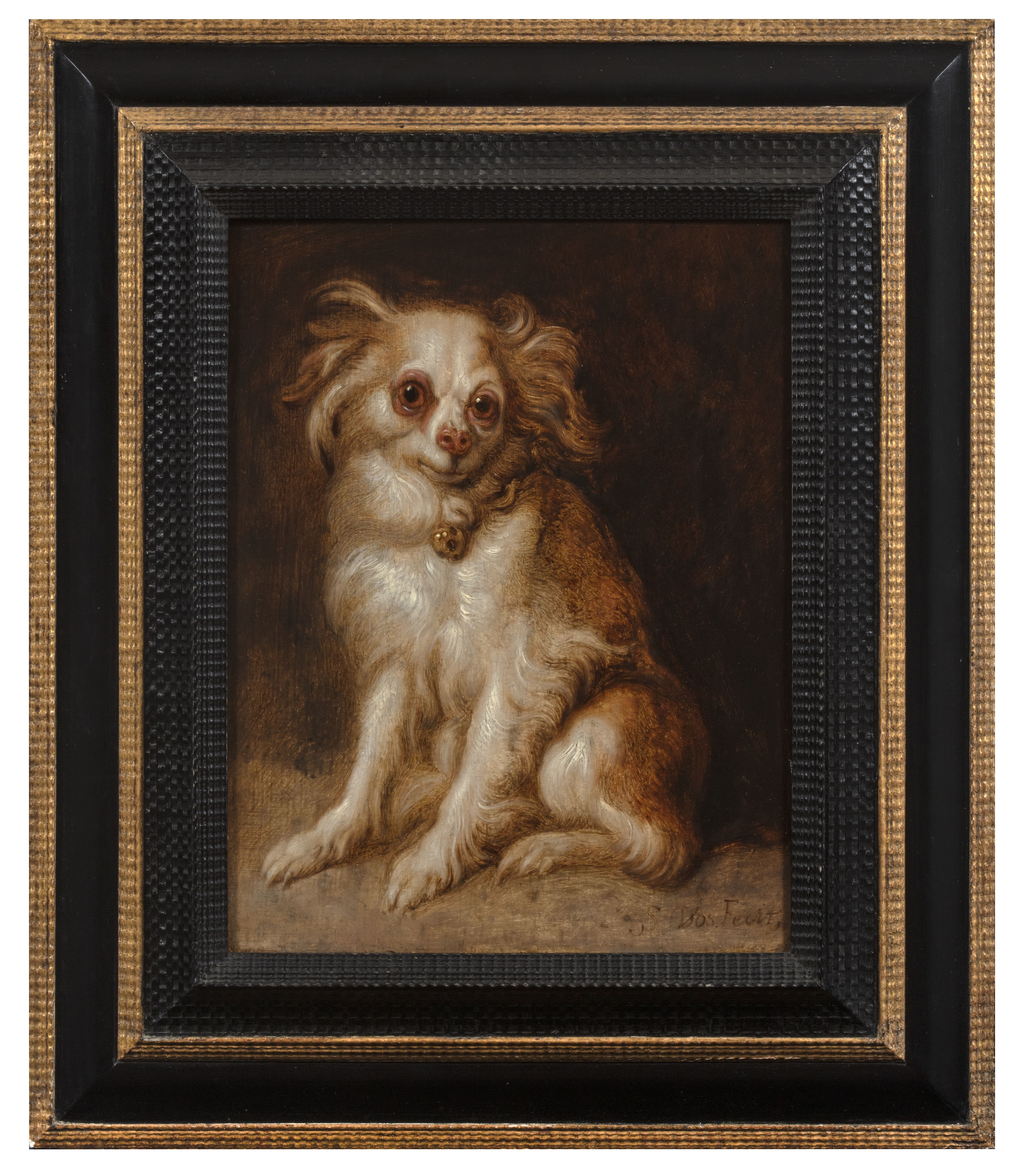
Simon de Vos
(Antwerp 1603 - Antwerp 1676)
A Cavalier King Charles Spaniel
Sammlung Antenor Patiño (1894-1982), Paris;
Kunsthandlung C.P.A. & G.R. Castendijk, Rotterdam;
Douwes Fine Art, Amsterdam;
Private Collection, Germany;
Private Collection, France;
Private Collection, Europe.
...
K. J. Müllenmeister, Meer und Land im Licht des 17. Jahrhunderts, vol. 3, Tierdarstellungen in Werken niederländischer Künstler (Depictions of animals in works by Dutch artists), Bremen 1973–1981, p. 93, no. 508.
...
Paris Tableau, November 10 – 15, 2015.
...
Simon de Vos was born in Antwerp and began his artistic training there with the famed portrait painter Cornelis de Vos (1584-1651), to whom, however, he was not related. In 1615 at the age of 17 he became a master in the Guild of St. Luke. There is limited information regarding his early years as an independent master. He may have worked in the studio of Peter Paul Rubens ...
He had returned to Antwerp by 1626 and continued to produce small scale genre scenes, portraits, and lively merry companies. In his later career he became more interested in grander large format works of religious and historical subjects. In these later works he was influenced by the great artist Rubens and later by Anthony van Dyck (1599-1641).
The present charming painting, a portrait really, of a small dog reveals an artist in command of his craft. De Vos had included such Cavalier King Charles Spaniels in a number of his paintings. The breed depicted here by de Vos was traditionally seen as a reference to the lap dog so esteemed and popularized by Margaret of Parma (1522-1586), governor of the Netherlands. As she had died in 1586, the subject of this painting cannot be a dog belonging to her, but perhaps was meant as a tribute to her of some kind.
Simon de Vos was born in Antwerp and began his artistic training there with the famed portrait painter Cornelis de Vos (1584-1651), to whom, however, he was not related. In 1615 at the age of 17 he became a master in the Guild of St. Luke. There is limited information regarding his early years as an independent master. He may have worked in the studio of Peter Paul Rubens (1577-1640) and, based on stylistic elements in his early genre scenes, he may well have spent time in Rome, where he would have met the Dutch and Flemish painters there known as the Bamboccianti. Their robust and lively low life subjects were strong influences on the work of the young artist.
You may also like
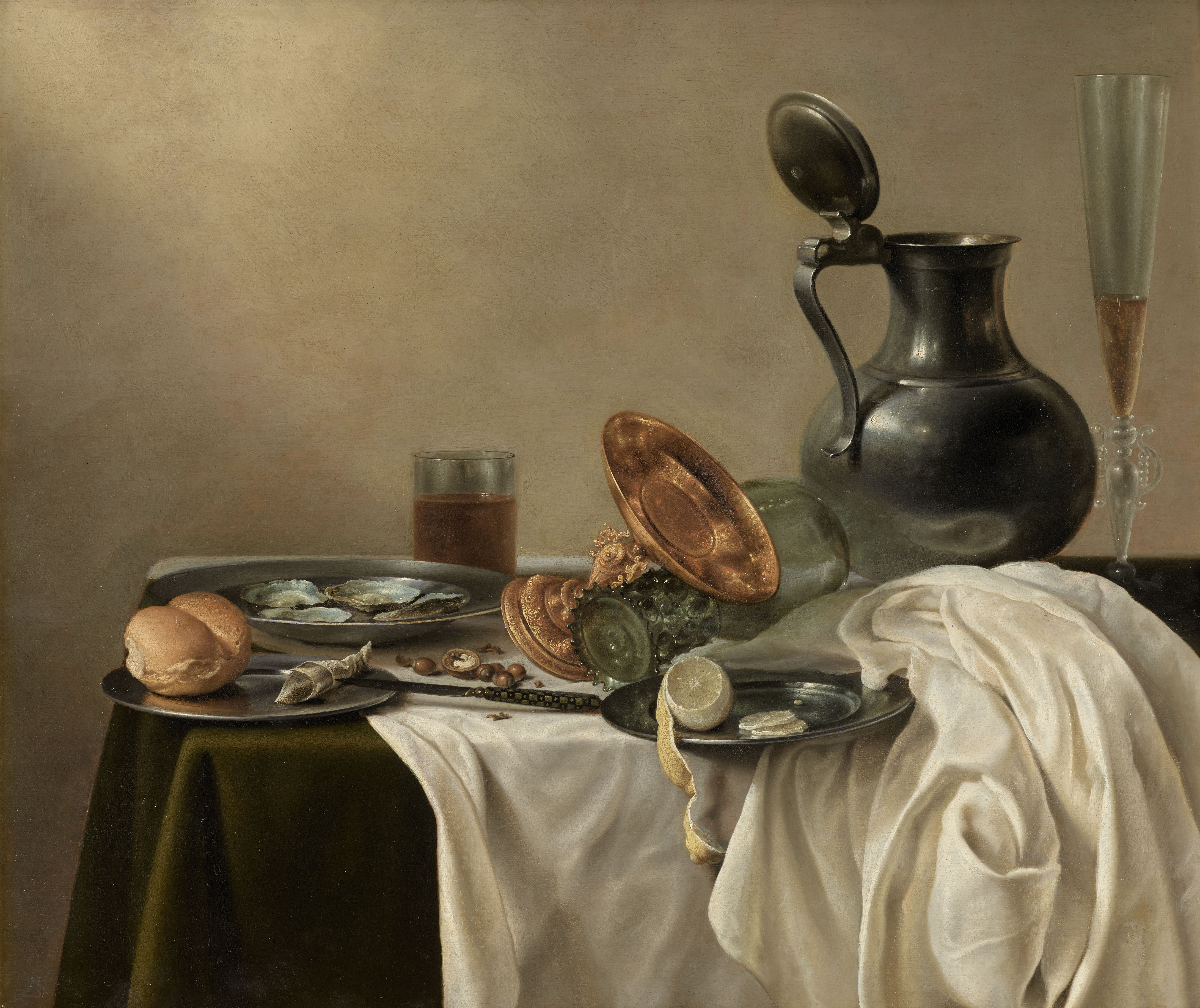
Pieter Claesz
(Berchem 1597 - Haarlem 1661)
“A Still Life with a Gilt Tazza, Pewter Jug, and a Fluted Wine Glass”
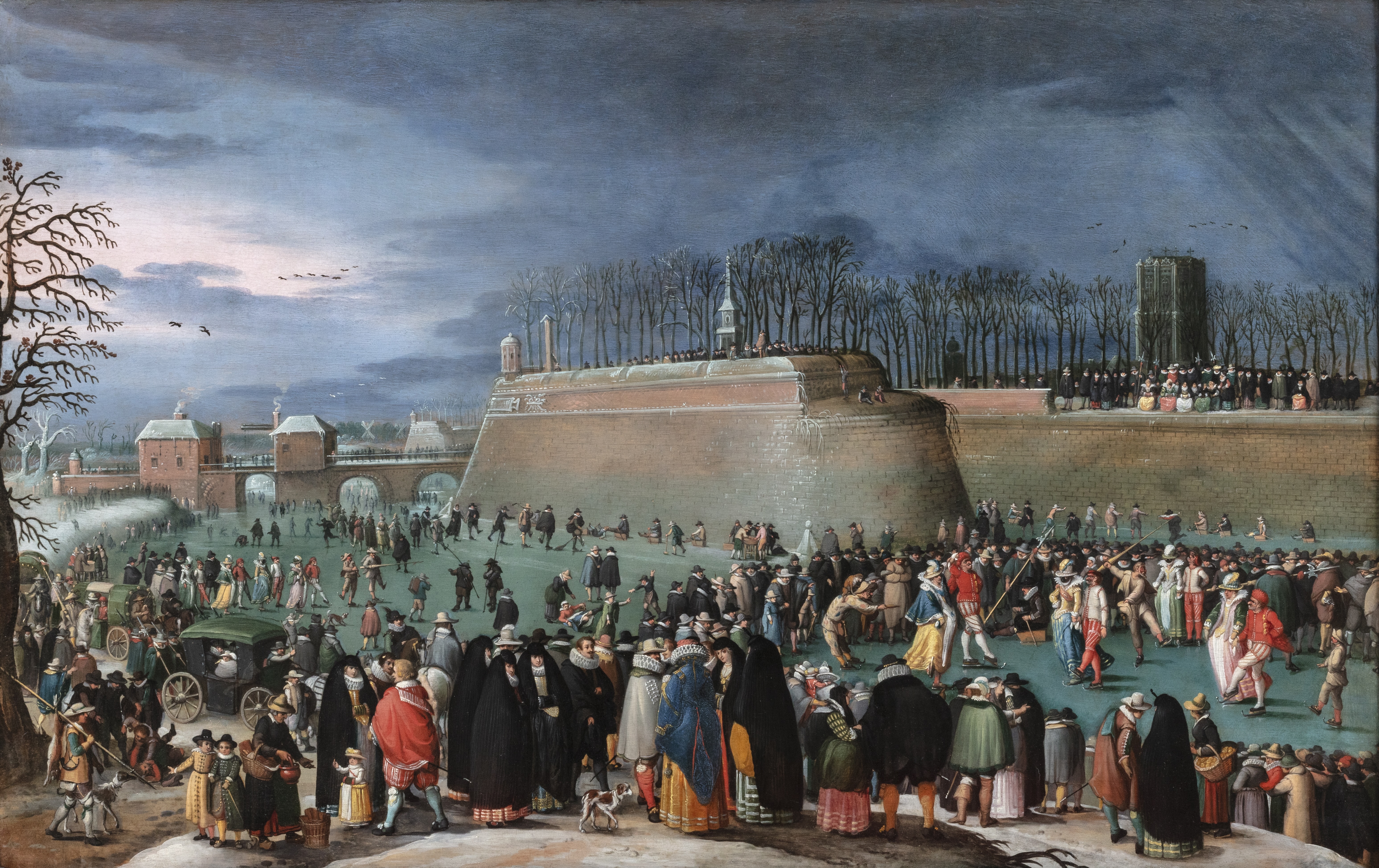
Sebastiaen Vrancx
(Antwerp 1573 - Antwerp 1647)
“Winter Carnival with Ice Skaters in front of the Kipdorppoort Bastion in Antwerp”


