 Facebook
 Twitter


 Gmail
Hans Rottenhammer
(Munich 1564 - Augsburg 1625)
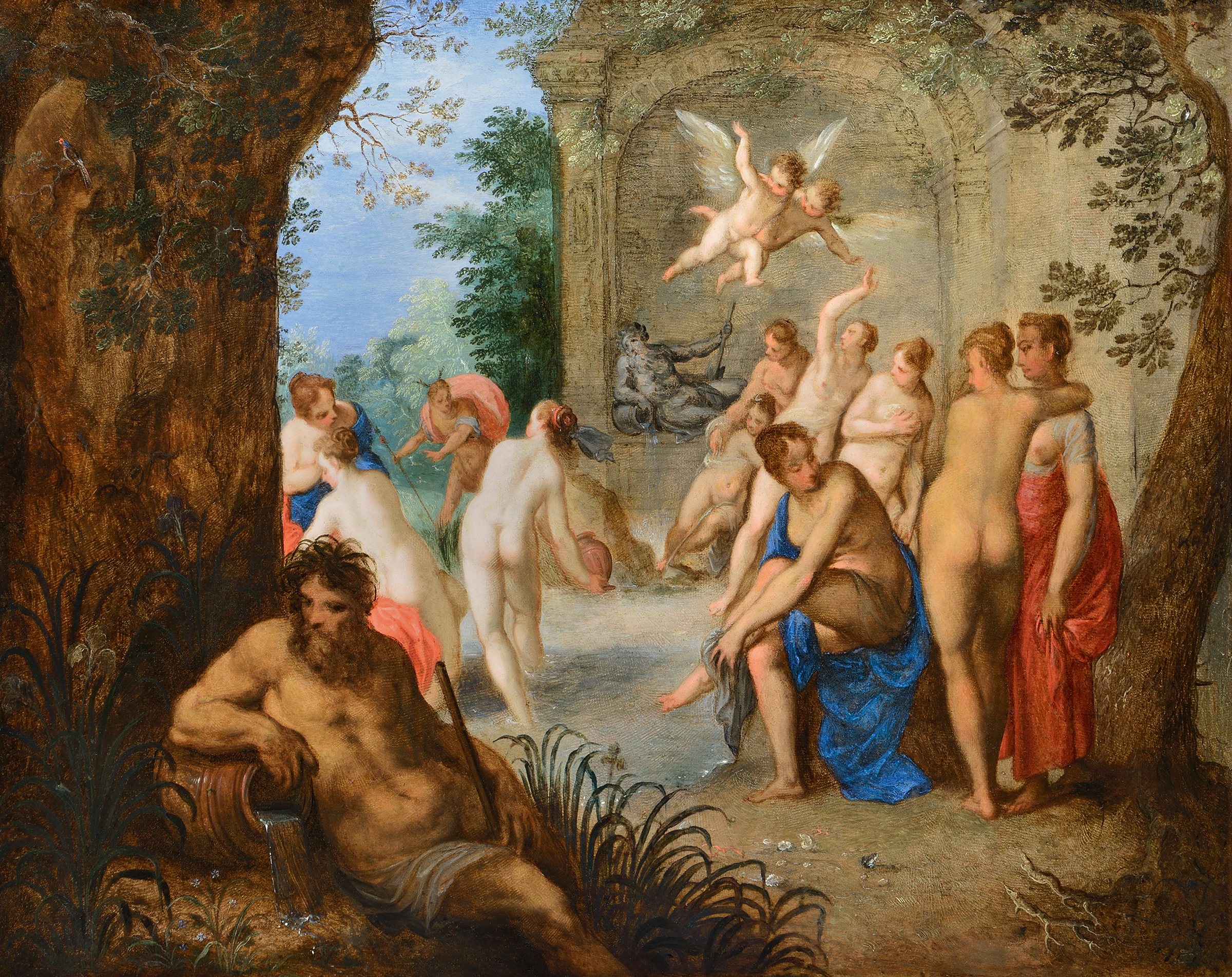
Diana and Actaeon with Nymphs
Private collection of museum director, United States
...
Heiner Borggrefe, Lubomír Kone?ný, Vera Lüpkes and Vít Vlnas (eds.), Hans Rottenhammer: begehrt – vergessen – neu entdeckt. [Cat. exh. Weserrenaissance-Museum Schloß Brake, Lemgo, August 17 – November 16, 2008;
Národní Galerie, Prague, December 11, 2008 – February 22, 2009, 2008
Rottenhammer was among the most famous of the German painters active in Italy at the turn of the 17th century. Like Elsheimer, Rottenhammer succeeded in Italy with small-scale paintings on copper, such as “The Coronation of the Virgin”. It is for these paintings of religious and mythological subjects that he is best known.
The present painting is the&n ...
Rottenhammer was born and trained with Hans Donauer in Munich and remained active there until 1588. He was known to be in Rome until about 1595/6, and is documented in Treviso, where he may have stayed with Lodewijk Toeput (Ludovico Pozzoserrato). He then went to Venice, where he stayed until 1606, probably working there with Pauwels Franck (Paolo Fiammingo). His best-known works were produced in Venice, where he was especially influenced by Jacopo Tintoretto.
In Venice he gained a reputation for small highly-finished cabinet paintings on copper of religious and mythological subjects, combining German and Italian elements of style. In particular he combines the landscape tradition of the North with the compositional and figure styles of Tintoretto and Veronese. He was the first German artist to specialize in such cabinet paintings.
By 1594/5 he was in Rome, where he became friendly with members of the Bamboccianti, a circle of Northern artists. Tottenhammer remained in regular contact with Paul and Mattheus Brill, Flemish artists living in Rome. According to the 1617 letter of a dealer, Rottenhammer would send Brill works with his painted figures to which Brill then would add the landscape detail. Rottenhammer remained in regular contact with Brill and also collaborated with Jan Brueghel the Elder in a similar way. This phenomenon of independent artists joining forces to execute single paintings was a novelty in the 1590s. So great was his reputation, that in 1600 he was commissioned to paint a Feast of the Gods for the Emperor Rudolph II, now in the Hermitage Museum.
Rottenhammer was back in Venice in 1595 and worked there until 1606 when he returned to Germany and settled in Augsburg. He is believed to have employed Adam Elsheimer as an assistantAdam Elsheimer as an assistant in 1598 or 1599, and no doubt gave Elsheimer an introduction to Bril; and when Elsheimer moved on to Rome, he and Bril became close friends. Two drawings by Rottenhammer (now in Copenhagen) belonged to Elsheimer, and have an inscription noting they were a gift from Rottenhammer. Elsheimer's mature paintings are all small and on copper, and continue to develop Rottenhammer's synthesis of German and Italian styles, and use of landscape.
Rottenhlammer enjoyed a remarkable reputation in Rome, Venice and northern Europe, and was also active as an agent, in which capacity he was probably involved in Rudolf II’s acquisition of Dürer’s Madonna of the Rosary. Rottenhammer’s compositions were sought after and widely distributed through paintings and prints. His work was particularly important for Antwerp cabinet painters such as Hendrick van Balen and Frans Francken the Younger. In Augsburg Rottenhammer received many important commissions; he increasingly abandoned cabinet painting, producing instead large altarpieces and compositions for secular interiors as well as designs for gold and silversmiths.
The present mythological scene has a theme of transformation. Here, the Goddess of the Hunt, Diana, is seen drying herself surrounded by her nymphs at her special bathing pool in a valley thick with cypresses and pines that was sacred to her. The serene pool formed by a fountain is seen within a cave. Here the Goddess of the woods would come when weary of hunting and bathe in the sparkling water.
One day, having repaired there with her nymphs, she lay aside her javelin, her quiver, and her bow and disrobed to bathe. While the goddess was thus employed in the labors of her toilet, the hunter, Acteon, son of King Cadmus, wandered away from his companions, appeared at the entrance of the cave, and stopped and stared, amazed at Diana’s ravishing beauty. When the nymphs saw a man they screamed and rushed to hide the Goddess. Diana, taken by surprise and without her arrows, could only splash water into the face of the intruder. Once seen by him, Diana took revenge on Acteon: she forbade him to ever speak, stating that if ever he tried to speak, he would be changed into a stag for the affront of seeing the Goddess naked. Upon hearing the call of his hunting party, Acteon cried out to them for help and immediately was transformed into a stag, as seen in the painting. He then fled deep into the woods with his own hounds in pursuit. They caught him and turned upon him, tearing him to pieces, not recognizing him as their master.
Rottenhammer was among the most famous of the German painters active in Italy at the turn of the 17th century. Like Elsheimer, Rottenhammer succeeded in Italy with small-scale paintings on copper, such as “The Coronation of the Virgin”. It is for these paintings of religious and mythological subjects that he is best known.
The present painting is the original composition, long thought lost, that relates to a drawing by Rottenhammer published in the exhibition catalogue by Michael Bisschoff, Thomas da Costa Kauffman, Heniner Borgrette and Buhn Arkema, which is in a private collection. A copy of the painting is in the Pushkin Museum, in Moscow. The original painting was recorded at the time of the exhibition as whereabouts unknown.
You may also like
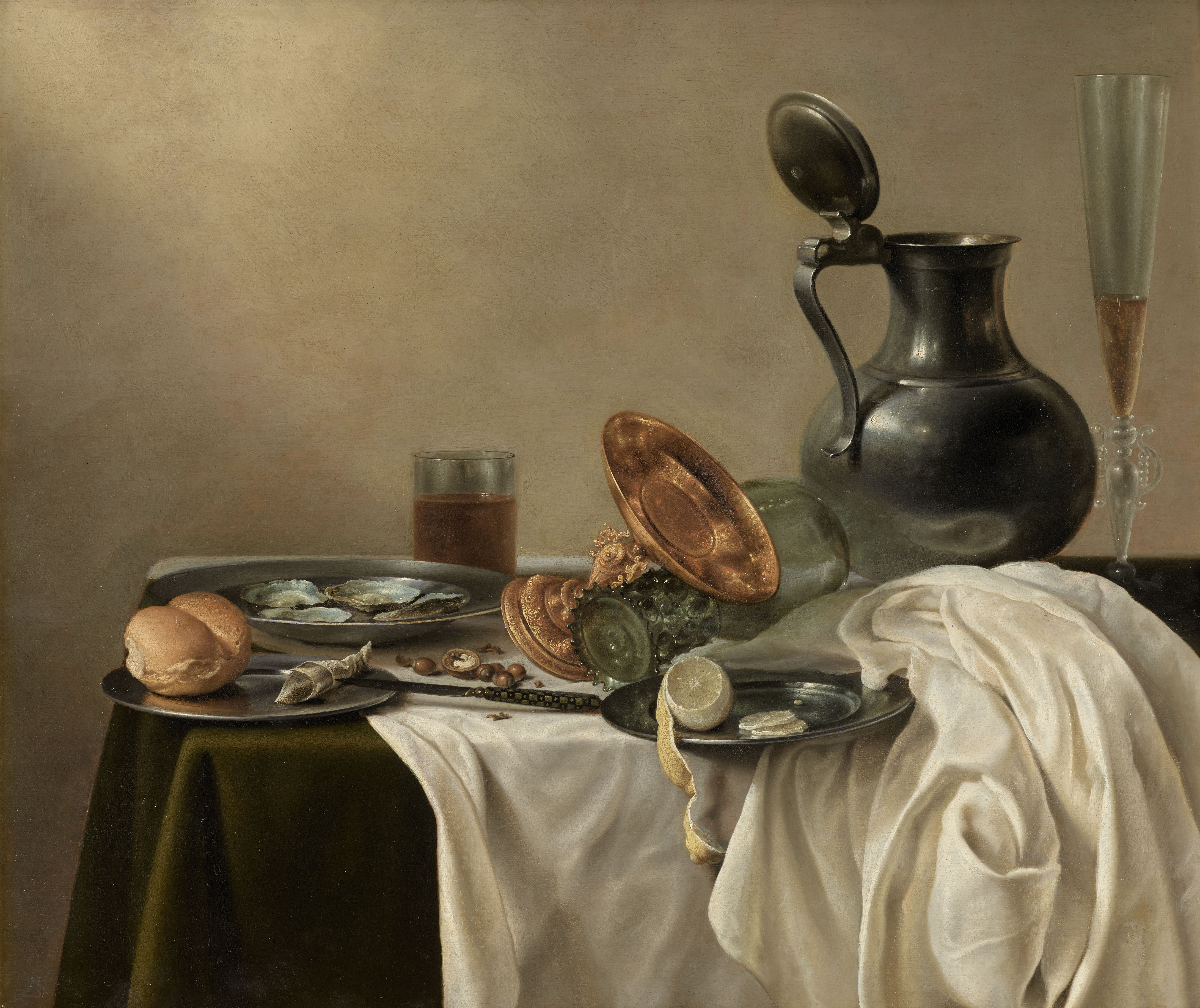
Pieter Claesz
(Berchem 1597 - Haarlem 1661)
“A Still Life with a Gilt Tazza, Pewter Jug, and a Fluted Wine Glass”
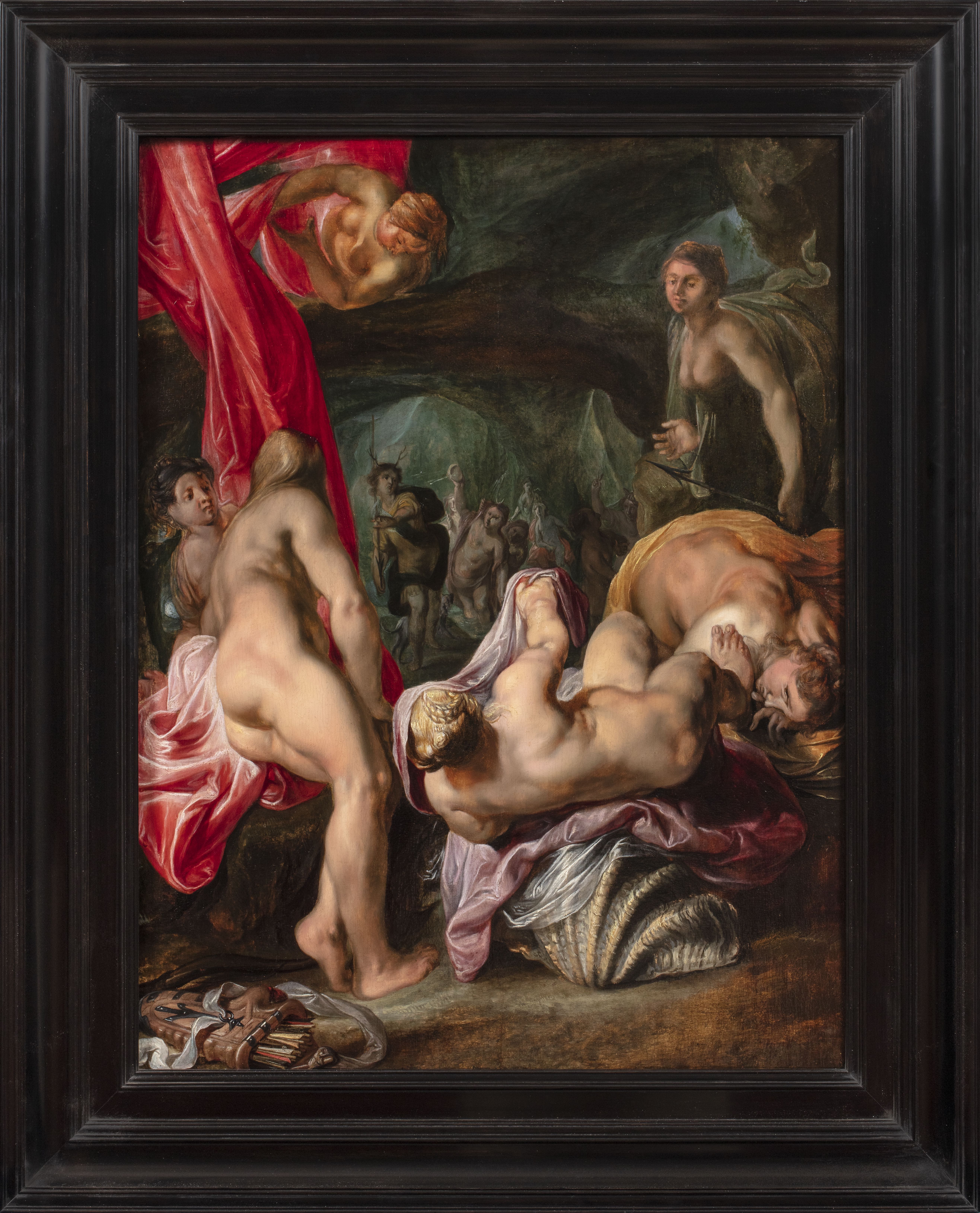
Sebastiaen Vrancx
(Antwerp 1573 - Antwerp 1647)
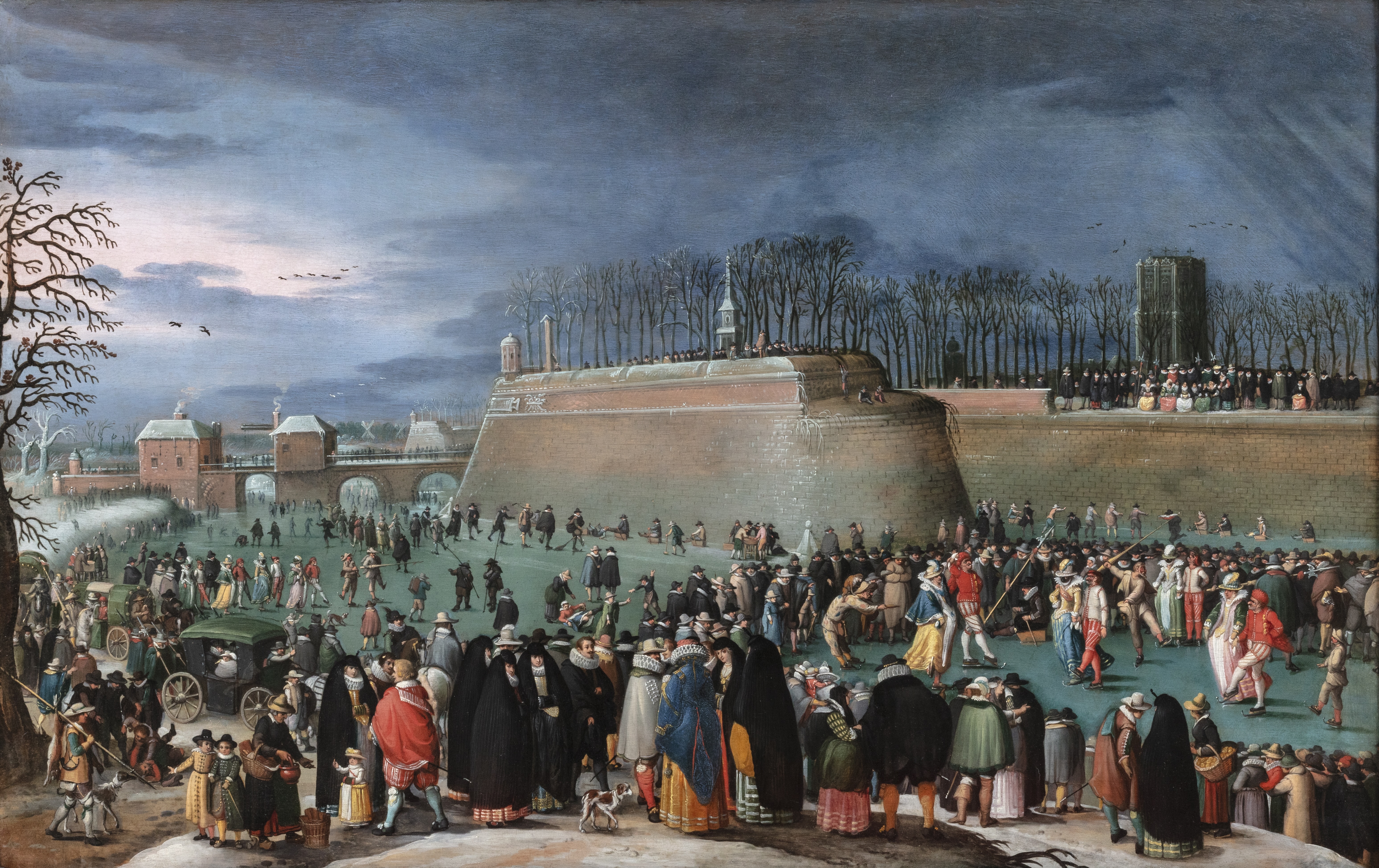
“Winter Carnival with Ice Skaters in front of the Kipdorppoort Bastion in Antwerp”


