 Facebook
 Twitter


 Gmail
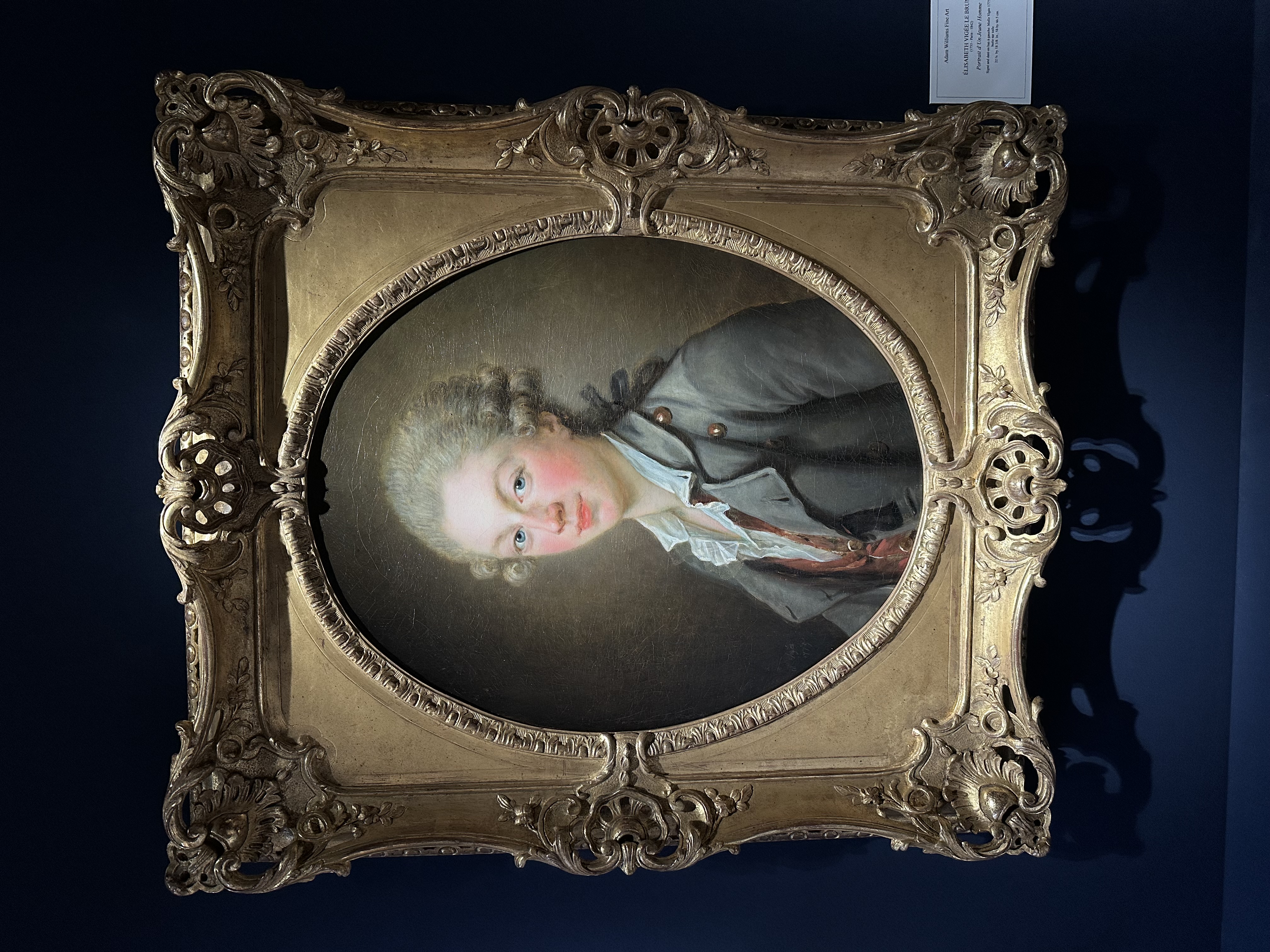
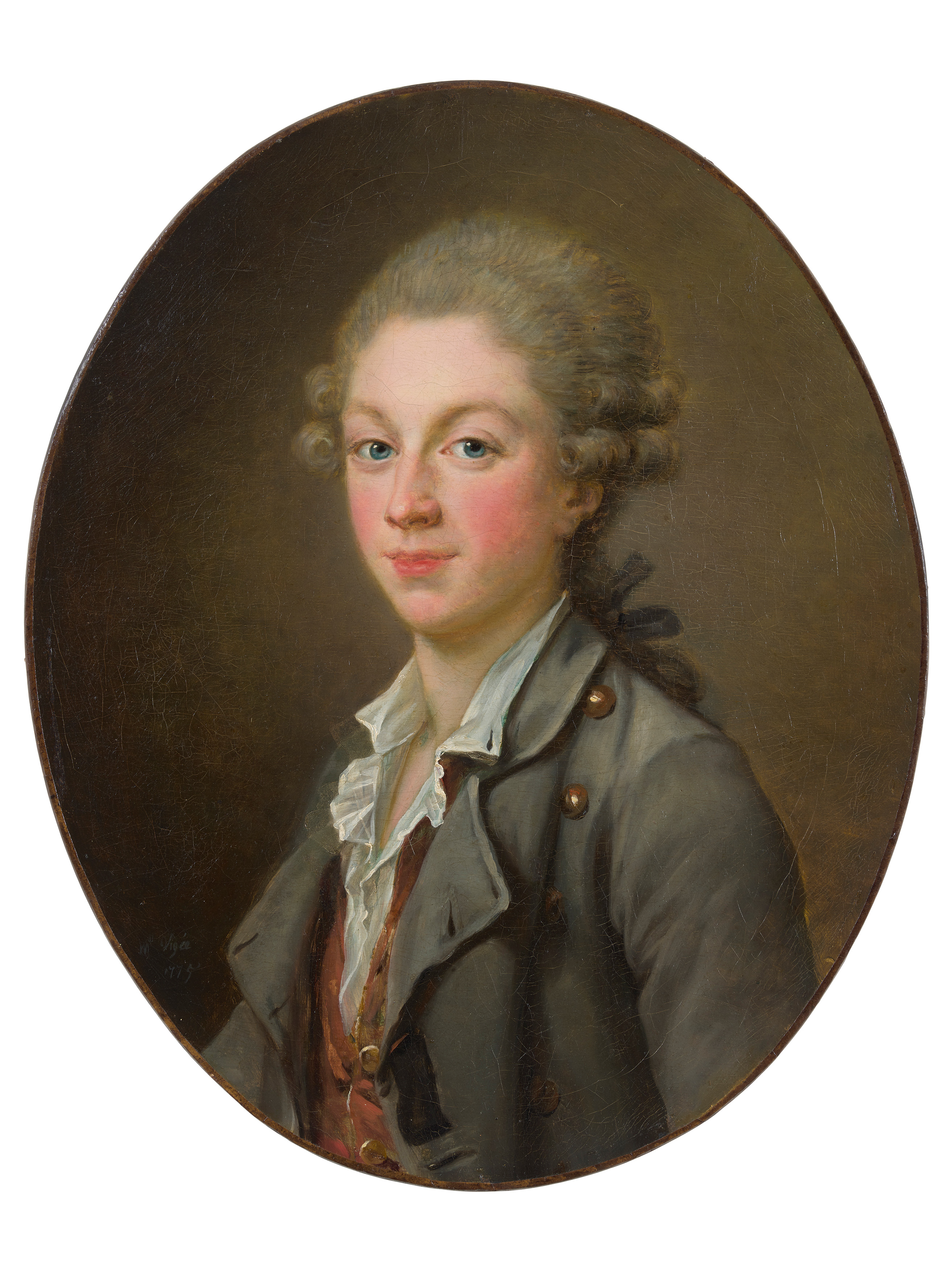
Élisabeth Louise Vigée-Le Brun
(Paris 1755 - Paris 1842)
Portrait of a Young Man
Collection of the Count of Montlivault, acquired in the 1930s;
By descent, it had remained in the family.
...
This work is to be included in the catalogue raisonné of Vigée Le Brun's work, currently in progress.
...
Elisabeth Louise Vigée painted this portrait in 1775, one year into the reign of Louis XVI. She then made a name for herself, and her diary mentions no less than seventy-four portraits delivered in 1776. The present work demonstrates why her portraits held such appeal for the French public. A young man gazes out at the viewer with piercing blue eyes. His wig is elegantly coiffed, pulled ...
Vigée’s first and only true painting instructor was her father, the portraitist Louis Vigée. When he died in 1768, it was Gabriel Doyen, a renowned painter and great friend of the latter, who encouraged Elisabeth to take up the brush again. At just fourteen years old, she was already making portraits in oil and pastel. Her father having left no fortune, it was through her art that she provided for herself and her mother.
Together they went to see the paintings of Rubens and “many rooms filled with paintings by the greatest masters” in Luxembourg as well as the galleries of great Parisian collectors. “I copied,” she reports again in the second letter of her Souvenirs, “several of Greuze's young girls' heads, because they strongly explained to me the half tones that are found in delicate complexions; Van Dyck explains them too, but in more detail. I owe to this work the very important study of the degradation of light on the projecting parts of a head, a degradation that I admired so much in the heads of Raphael. My aptitude for painting was remarkable, and my progress was so rapid, that people began to talk about me in the world, which earned me the satisfaction of knowing Joseph Vernet.” The latter advised her: “above all, do as much as you can from nature: nature is the first of all masters.”
When Le Brun finished painting this work, she signed her maiden name – she would not be married until the following year, 1776. The stamps on the frame are those of Henri Létonné, registered master carpenter in Paris on 9 June 1773 and Antoine Levert, carpenter and cabinetmaker, registered as master in Paris on 14 December 1774. With portraits such as the present circulating, her reputation in the following year grew immensely. Only three years later, in 1778, she painted Queen Marie-Antoinette for the first time in full court costume.
Joseph Baillio confirmed the authenticity of the work, based on a digital photograph; he has supplied a certificate dated February 2, 2024, which will be given to the purchaser.
Elisabeth Louise Vigée painted this portrait in 1775, one year into the reign of Louis XVI. She then made a name for herself, and her diary mentions no less than seventy-four portraits delivered in 1776. The present work demonstrates why her portraits held such appeal for the French public. A young man gazes out at the viewer with piercing blue eyes. His wig is elegantly coiffed, pulled back with a grey ribbon. A matching grey jacket is unbuttoned, revealing his white collared shirt and crimson vest. The flush of his cheeks, spreading to his chin, suggest a youthful man in his prime, confident and self-assured.
You may also like
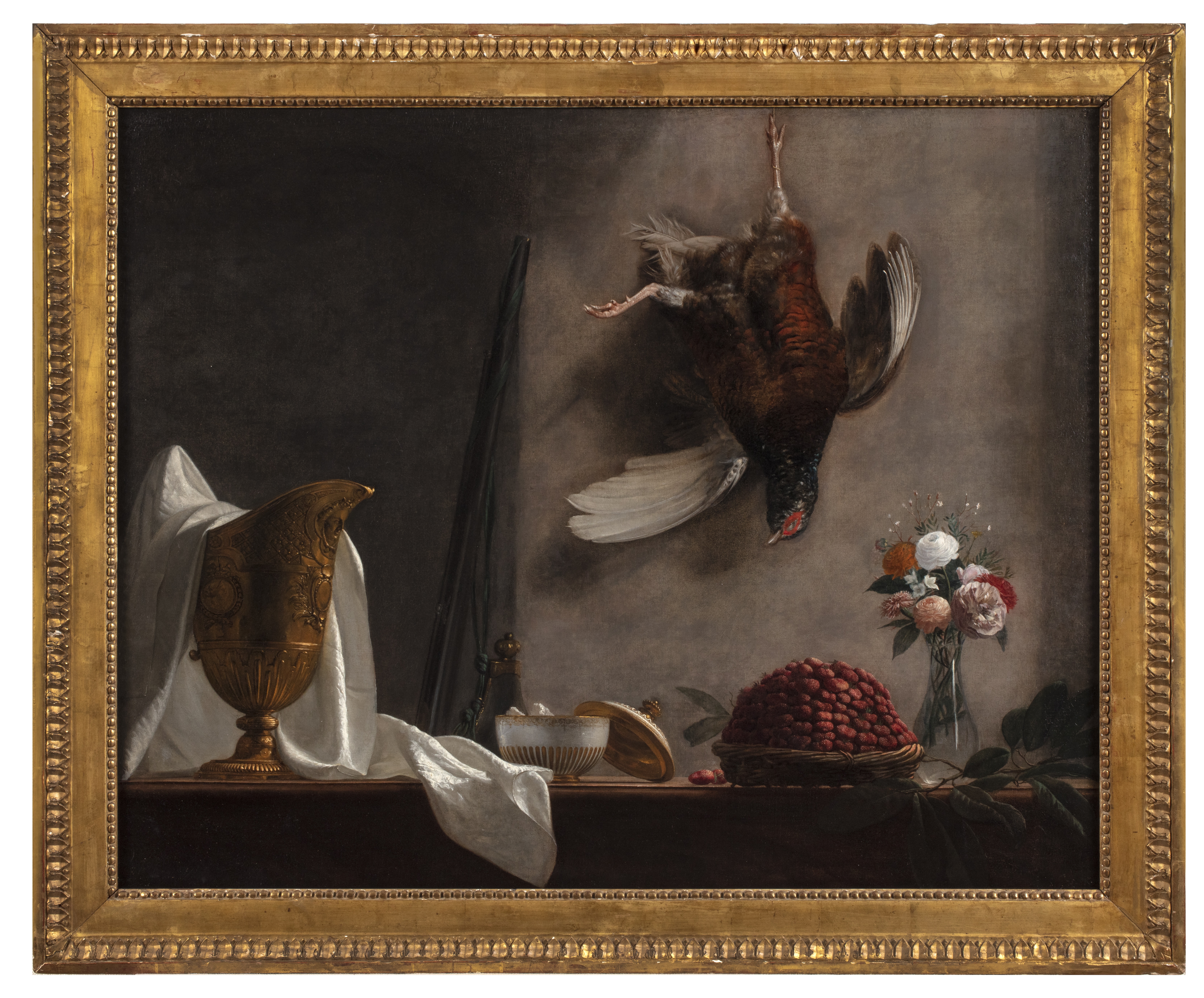
Antoine de Marcenay de Ghuy
(Amay-le-Duc 1724 - Paris 1811)
“A silver-gilt ewer with other vessels, a gun, a basket of strawberries and a bouquet of flowers in a glass vase on a ledge with a pheasant above”


